Resorts · BROKOPONDO / AFOBAKA DAM BRANCH — NOT DIRECT ATJONI ROUTE
Afobaka Resort
BROKOPONDO / AFOBAKA DAM BRANCH — NOT DIRECT ATJONI ROUTE
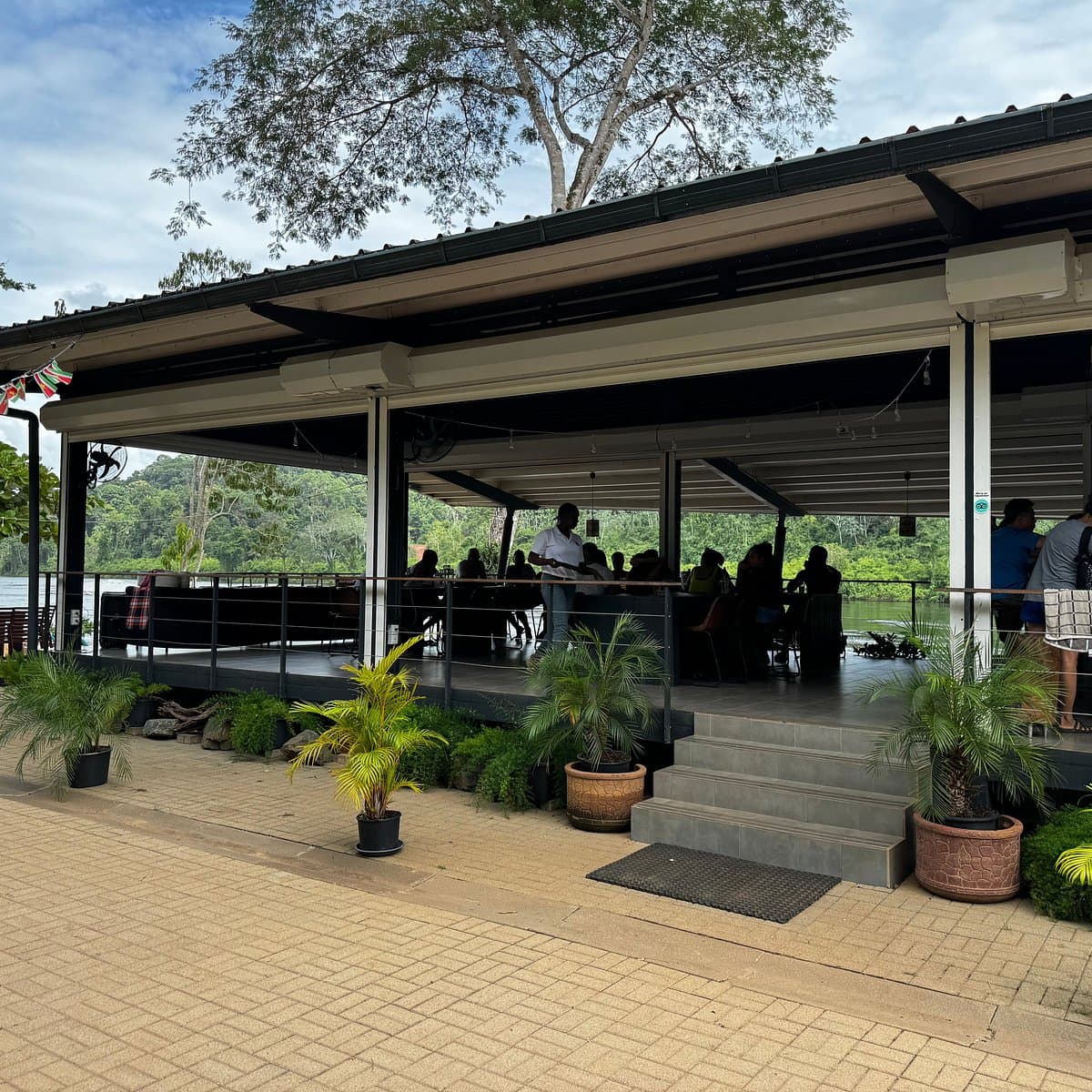
Afobaka Resort is a riverside eco-resort in Brokopondo District, just beyond the Afobaka Dam. It sits on the left bank of the Suriname River, near the Prof. Dr. Ir. W. J. van Blommenstein Reservoir, and offers day visits, lodges, restaurant services, swimming, nature trails, boat trips, fishing and events.
Local rules
Road and resort access Confirm the road condition and exact entrance before departing. Use the resort’s current map pin rather than relying only on the approximate coordinates. Reserve day passes, accommodation, restaurant seating, boat rides and events in advance. Do not assume a gate entry guarantees access; older booking material states that registration does not guarantee entry during capacity or booking restrictions. Bring identification, drinking water, insect repellent, sunscreen, rain protection and personal medication. Carry cash or confirm accepted payment methods. Avoid arriving after dark unless the resort has confirmed check-in and road access. River and swimming safety Swim only in areas approved by resort staff. Swimming is at the visitor’s own risk unless current resort rules say otherwise. Children must be supervised directly. Do not swim alone, after drinking alcohol, during storms, or near boats. Wear a life jacket for boat rides, kayaking and reservoir excursions. Do not approach submerged tree trunks or unknown channels. Do not dive in unfamiliar water. Follow staff instructions about river level, currents, floating debris and weather. Do not use private beaches or boats without permission. The resort promotes swimming, boat rides and fishing, but the reservoir and river contain submerged trees and changing conditions. Environmental and visitor protocol Use designated trails, picnic areas, swimming zones and fire areas. Do not litter or discharge oil, fuel, soap or waste into the Suriname River. Do not cut vegetation, collect wildlife, remove timber or disturb nesting sites. Keep food secured and do not feed wildlife. Ask before using drones, commercial cameras, professional filming or large sound systems. Respect nearby villages, private property, utility facilities, dam infrastructure and any concession areas. Do not enter the Afobaka Dam or operational infrastructure without authorization. Follow quiet hours and resort staff instructions. Report accidents, missing persons, damaged equipment or hazardous water conditions immediately. Pre-visit checklist Confirm directly with Afobaka Resort: Current opening hours and day-pass availability. Exact map pin and entrance route. Accommodation availability and rates. Restaurant hours and reservation requirements. Swimming-area and river conditions. Boat-trip safety equipment and schedule. Nearest clinic and emergency procedure. Accepted payment methods. Pet, alcohol, camping, drone and outside-food rules. Road conditions for the return trip.
Nearest help
Afobaka Resort is outside a major urban service centre. It has no confirmed hospital, full-time ambulance station, or fire station on the property. Police emergency, 115 Fire emergency, 110 Medical emergency, 113 Private ambulance, 117, where available Disaster coordination, 144, where available Local medical support, Confirm the Afobaka Medical Mission/clinic contact before arrival Medical Mission general office, +597 499-466; info@medischezending.sr Serious treatment, Plan transfer toward Brokopondo or Paramaribo Air evacuation, Coordinate with a qualified operator and confirm Afobakka Airstrip/SMAF status Suriname’s official emergency services list 115 for police, 110 for fire and 113 for emergency medical assistance. Because the resort is near the river and reservoir, a medical or water emergency may require a vehicle, boat, or air evacuation before hospital-level treatment is available. Before check-in, ask the resort for: Nearest active clinic and telephone number. Named first-aid contact. Local police-post contact. Boat rescue arrangement. Night-time emergency procedure. Exact route for ambulance or evacuation vehicle. Satellite or backup communication availability.
Last verified 2026-09-16 · version 2
Confirm the exact meeting point with your operator.
- Coordinates
- 4.989628, -54.988332
- Contact
- +597 8685636 · afobakaresort@paragroup.net
Save essential contacts before departure. Agree who checks your arrival and how to communicate if mobile reception is lost.
Safety protocols for this kind of place
G02Your first minutes at a lodgeAsk for a short safety briefing when you arrive, even if you have stayed in the area before.
Ask for a short safety briefing when you arrive, even if you have stayed in the area before. A few clear questions help you find the right person and route if something happens.
- Who can you contact during the day and at night? Save the number and learn where to find that person.
- Where are the exits, meeting point, first aid supplies and fire extinguishers? Walk the route from your room while it is light.
- Which paths, riverbanks or jetties should guests avoid, especially after dark or rain?
- Which water is provided for drinking? Where can you wash your hands and refill safe drinking water?
- Where is the relevant clinic, and how would the lodge arrange transport if medical help is needed?
Tell the host about assistance you may need and any serious allergy relevant to your stay. Keep a torch within reach, keep the exit route clear, and secure valuables. Follow the property's mosquito protection and food hygiene advice. Before leaving on an excursion, tell the host your plan and expected return.
Version 1 · Reviewed 2026-12-15 · Source SCSD_Tourism_Safety_Project_Knowledge_Pack/02_DELIVERABLES_AND_REPORTS/Rev. - DELIVERABLE 2 REPORT - Tourism Awareness&Saferty SCSD project.docx | SCSD_Tourism_Safety_Project_Knowledge_Pack/03_SAFE_GUIDE_WORKSHOP_AND_TRAINING/SCSD_Safe_Guide_Workshop_1_FI
S01Accommodation safety briefingBrief guests on exits, assembly points, fire equipment and local hazards.
Visitor On arrival, explain emergency exits, assembly points, fire equipment, first-aid supplies, emergency contacts and relevant river or wildlife hazards. Guests should know who to contact at the property.
Version 2 · Reviewed 2026-12-15 · Source Rev. - DELIVERABLE 2 REPORT - Tourism Awareness&Saferty SCSD project.docx, section 3.3; draft pending TCT/PIU approval
S02Health and medical preparednessCarry personal medicines and agree how to reach medical care.
Carry your required personal medicines. Tell the host only the essential health information needed to assist you safely. Ask which clinic is relevant to your destination, how to contact it and how transport would be arranged. Keep your insurer’s assistance details accessible.
Version 1 · Reviewed 2026-12-15 · Source SCSD project Revised Deliverable 2 and Workshop 1 protocol guidance; https://www.medischezending.sr/contact/
S03Safe drinking waterUse treated or bottled water when advised.
Use treated or bottled drinking water when advised. Avoid untreated river water and ask the host which water source is safe for drinking.
Version 1 · Reviewed 2026-12-15 · Source Rev. - DELIVERABLE 2 REPORT - Tourism Awareness&Saferty SCSD project.docx, section 3.3; draft pending TCT/PIU approval