Airports · Brokopondo
Brownsweg Airstrip
Brokopondo
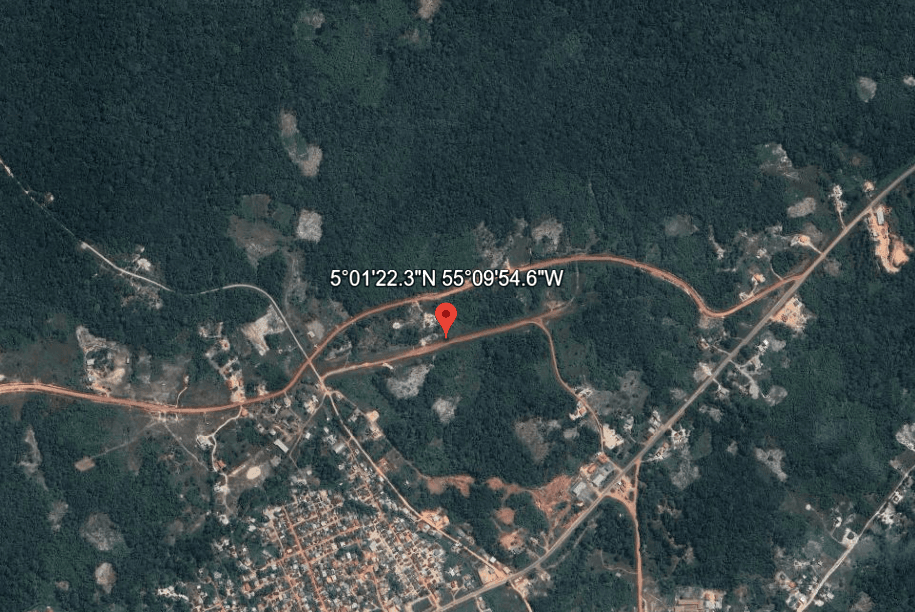
Brownsweg Airstrip is a small, unattended grass airstrip serving the resort (village) of Brownsweg in the Brokopondo District of Suriname. It is used mainly for medevac, charter, and occasional supply flights into the interior.
Local rules
Specific published, airstrip‑only rule sets for Brownsweg are not publicly detailed, but the following applies based on Suriname’s civil aviation framework and how interior airstrips are typically used: Regulatory framework All civil aircraft in Suriname must land at and take off from designated aerodromes unless the Minister grants an exemption. Aerodrome operations and use are governed under CASAS regulations, including: CARS Part 10 (foreign operators, permissions to operate in Suriname) CARS Part 9 / Part 8 (flight rules, operational limitations) CARS 012 – Aerodromes (aerodrome standards and requirements) In practice, this means: Use of Brownsweg Airstrip by non‑local or commercial operators generally requires prior coordination with CASAS and often with the local district/resort authorities. Foreign operators must hold appropriate Foreign Air Operator Approval or other authorization from CASAS before operating in Suriname. Typical access conditions for interior airstrips like Brownsweg While Brownsweg‑specific NOTAMs or published aerodrome charts are not readily available in open sources, interior Surinamese airstrips commonly share these characteristics: Unattended / uncontrolled: No tower, no regular ATC; pilots self‑announce and follow standard uncontrolled aerodrome procedures. Runway surface: Grass / natural surface, suitable for light aircraft and helicopters; condition varies with weather. No published lighting or navigational aids: Daylight VFR operations are the norm; night or low‑visibility operations are generally not supported unless specially arranged. Prior permission recommended/required: Especially for charter, medevac, or non‑routine flights, operators typically coordinate with: CASAS (regulatory/airspace and aerodrome compliance) Local authorities (resort council, district commissioner’s office) for ground access and security. Medische Zending if the flight is medical/evacuation related. If you are planning a flight, you should: Contact CASAS for current rules, any required permits, and whether Brownsweg is listed as a designated aerodrome for your operation type. Coordinate with local Brownsweg authorities / Medische Zending for ground handling, security, and emergency support. Verify runway condition and usability with local operators familiar with recent weather and usage.
Nearest help
Brownsweg itself has a primary health care center that serves the surrounding rainforest communities: Medische Zending (MZS) Primary Health Care Center – Brownsweg This is the main medical facility in Brownsweg, staffed by a permanent doctor and nurses, and is the first point of care for locals and visitors. It is located in the town of Brownsweg and is reachable by road (Afobakaweg) from the airstrip area. For higher-level care, the nearest hospital is several hours away by road/river in the Paramaribo area (e.g., Academic Hospital Paramaribo and other city hospitals). Public sources describe the nearest hospital as “at least a few hours away” from Brownsweg. Other practical help points in/near Brownsweg: Local resort administration / village office – typically the first local contact for logistics and community assistance. Police post – Brokopondo District has police posts; the Brownsweg area is served by district authorities based in Brokopondo town. Civil Aviation Safety Authority Suriname (CASAS) – national regulator for all aerodromes and flight operations in Suriname; relevant for permissions and rules.
Last verified 2026-10-07 · version 3
Confirm the exact meeting point with your operator.
- Coordinates
- 5.022859, -55.165171
Save essential contacts before departure. Agree who checks your arrival and how to communicate if mobile reception is lost.
Safety protocols to read before you travel
A01Guided activitiesUse a guide who knows the route and explains the safety arrangements.
Choose a guide through an established operator and ask about route experience, training, equipment and emergency arrangements. Follow the safety briefing, stay with the group and do not undertake an unfamiliar activity alone. Stop when conditions become unsafe.
Version 1 · Reviewed 2026-12-15 · Source SCSD project Revised Deliverable 2 and Workshop 1 protocol guidance
A02Jungle excursionsStay on known trails, share the route and carry essential supplies.
Stay on marked or known trails, tell someone the intended route and carry water, communications and a basic first-aid kit. Avoid excursions during severe weather.
Version 2 · Reviewed 2026-12-15 · Source Rev. - DELIVERABLE 2 REPORT - Tourism Awareness&Saferty SCSD project.docx, section 3.3; draft pending TCT/PIU approval
A03Water recreation and river hazardsCheck physical hazards and fresh-water health risks before an activity.
Ask the guide about currents, rocks, water levels and safe access before any water activity. Wear suitable flotation equipment for boating. Do not dive into unfamiliar water or enter rapids to swim or bathe, and keep children under close supervision. CDC advises avoiding swimming in unchlorinated rivers, lakes and ponds in Suriname because fresh water can carry infections. A locally designated swimming spot does not establish water quality.
Version 1 · Reviewed 2026-12-15 · Source SCSD project Revised Deliverable 2 and Workshop 1 protocol guidance; https://wwwnc.cdc.gov/travel/destinations/traveler/none/suriname
A04Wildlife awarenessDo not approach or feed wildlife; report dangerous sightings.
Do not approach or feed wildlife and do not handle unknown plants or animals. Keep a safe distance and report dangerous wildlife sightings to the guide or responsible local contact.
Version 1 · Reviewed 2026-12-15 · Source Rev. - DELIVERABLE 2 REPORT - Tourism Awareness&Saferty SCSD project.docx, section 3.3; draft pending TCT/PIU approval