Communities · EXTENSION — farther upriver beyond Botopasi/Dan; not part of the road corridor
Djumu
EXTENSION — farther upriver beyond Botopasi/Dan; not part of the road corridor
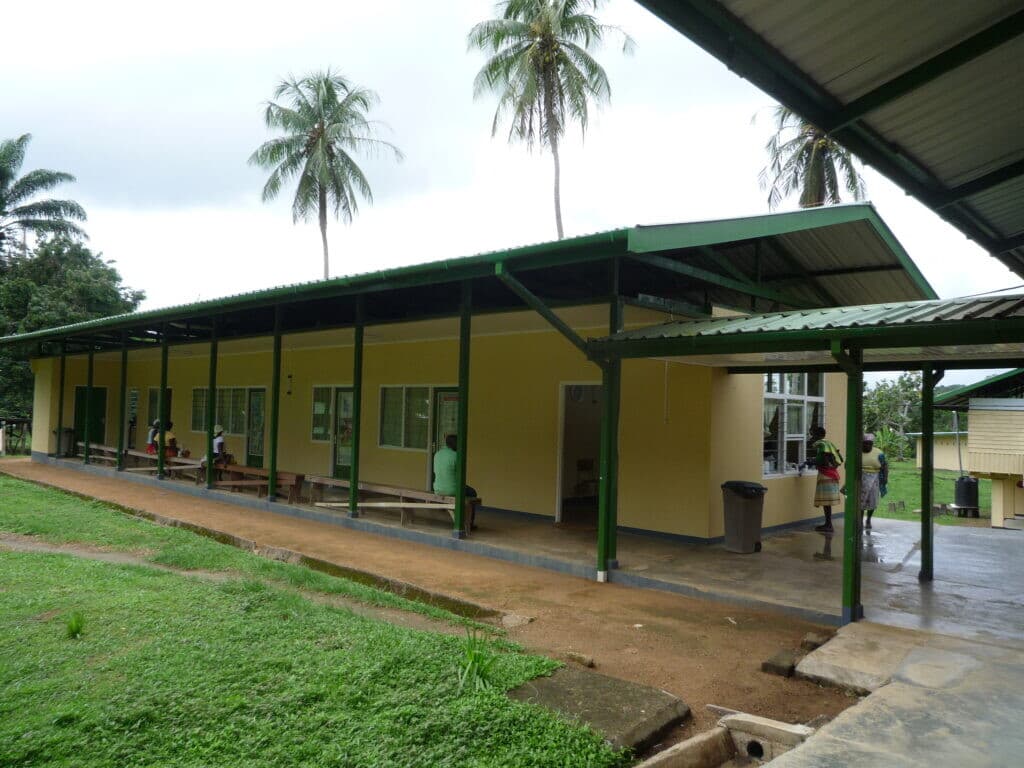
Djumu, also written Djoemoe or Dyumu, is a Saramaka Maroon village in Sipaliwini District. It lies at the confluence of the Gran Rio and Pikin Rio, where they continue downstream as the Upper Suriname River. Djumu is an important transport and medical-services centre for surrounding river communities. Upper Suriname community. Address / area: Djumu / Gran Rio–Pikin Rio confluence, Boven Suriname, Sipaliwini, Suriname
Local rules
By air Flights normally depart from Zorg en Hoop Aerodrome in Paramaribo. Confirm: Airline and aircraft type. Baggage allowance. Weather restrictions. Passenger identification requirements. Current airstrip condition. Whether a boat transfer is needed from the airstrip to the final destination. Return-flight and missed-flight arrangements. Do not assume the runway is open, lit, staffed or suitable for night arrival. By river Djumu can also be reached by river, including boat travel from downstream locations such as Pokigron or from Upper Suriname communities. For boat travel: Use a locally experienced captain. Wear life jackets. Confirm water levels, rapids and weather. Protect baggage and medication against rain and spray. Carry reserve fuel, water and communications equipment. Avoid night travel unless specifically authorized and properly equipped. Confirm the exact landing point before departure. Local rules and community protocol Djumu is a Saramaka community. The complete current village rulebook is not publicly available, so visitors should follow the captain, basja, elders and host organization. Entry Introduce yourself before entering the village. Explain your purpose, dates, group size, equipment and transport. Ask whether you need permission from the captain or a community meeting. Do not treat the airstrip, clinic or river landing as permission to enter private community areas. Follow local instructions about photography, clothing, ceremonies and quiet periods. Photography and research Ask before photographing or filming residents, houses, ceremonies, children, elders or the health centre. Obtain approval for drones, surveys, GPS mapping, interviews and commercial filming. Explain how names, images, recordings and coordinates will be used. Do not publish sensitive cultural, sacred or land-use information without consent. Do not remove cultural objects, plants, timber, wildlife or artefacts. River and environmental conduct Follow boat-captain instructions near the river junction and rapids. Do not swim in current channels without local guidance. Keep fuel, oil, soap and rubbish out of the river. Do not cut vegetation or disturb wildlife. Use designated paths, docks and gathering areas. Respect neighbouring villages, burial grounds, sacred places and private land. Verification checklist Before travelling to Djumu, confirm: Current village authority and local contact. Exact lodging or destination coordinates. Current airstrip status and flight schedule. Baggage limits and cancellation policy. Direct Djumu clinic contact. Boat captain and backup transport. Weather and river levels. Emergency evacuation route. Photography, drone and research permissions. Return plan before dark.
Nearest help
Medical emergency 113 Police emergency 115 Fire emergency 110 Djumu Medical Mission Central local medical post for the area Medical Mission headquarters +597 499-466 Air evacuation Arrange through a domestic operator and the receiving medical service River evacuation Local boat captain, village authority and health centre Definitive treatment Transfer toward Paramaribo if local care is insufficient The Upper Suriname region has limited emergency infrastructure. Even when the Djumu health centre is open, it is not equivalent to a full hospital or intensive-care unit. Plan for evacuation by boat or aircraft for serious trauma, snakebite, drowning, childbirth complications or severe infection. Before fieldwork, obtain: The clinic’s current direct number. The duty nurse or doctor contact. A local boat captain and backup captain. Air-evacuation availability. The current runway condition. Satellite or radio communications. The nearest safe landing and boat-loading points.
Last verified 2026-09-16 · version 2
Confirm the exact meeting point with your operator.
- Coordinates
- 4.009851, -55.467926
Save essential contacts before departure. Agree who checks your arrival and how to communicate if mobile reception is lost.
Safety protocols to read before you travel
A01Guided activitiesUse a guide who knows the route and explains the safety arrangements.
Choose a guide through an established operator and ask about route experience, training, equipment and emergency arrangements. Follow the safety briefing, stay with the group and do not undertake an unfamiliar activity alone. Stop when conditions become unsafe.
Version 1 · Reviewed 2026-12-15 · Source SCSD project Revised Deliverable 2 and Workshop 1 protocol guidance
A02Jungle excursionsStay on known trails, share the route and carry essential supplies.
Stay on marked or known trails, tell someone the intended route and carry water, communications and a basic first-aid kit. Avoid excursions during severe weather.
Version 2 · Reviewed 2026-12-15 · Source Rev. - DELIVERABLE 2 REPORT - Tourism Awareness&Saferty SCSD project.docx, section 3.3; draft pending TCT/PIU approval
A03Water recreation and river hazardsCheck physical hazards and fresh-water health risks before an activity.
Ask the guide about currents, rocks, water levels and safe access before any water activity. Wear suitable flotation equipment for boating. Do not dive into unfamiliar water or enter rapids to swim or bathe, and keep children under close supervision. CDC advises avoiding swimming in unchlorinated rivers, lakes and ponds in Suriname because fresh water can carry infections. A locally designated swimming spot does not establish water quality.
Version 1 · Reviewed 2026-12-15 · Source SCSD project Revised Deliverable 2 and Workshop 1 protocol guidance; https://wwwnc.cdc.gov/travel/destinations/traveler/none/suriname
A04Wildlife awarenessDo not approach or feed wildlife; report dangerous sightings.
Do not approach or feed wildlife and do not handle unknown plants or animals. Keep a safe distance and report dangerous wildlife sightings to the guide or responsible local contact.
Version 1 · Reviewed 2026-12-15 · Source Rev. - DELIVERABLE 2 REPORT - Tourism Awareness&Saferty SCSD project.docx, section 3.3; draft pending TCT/PIU approval