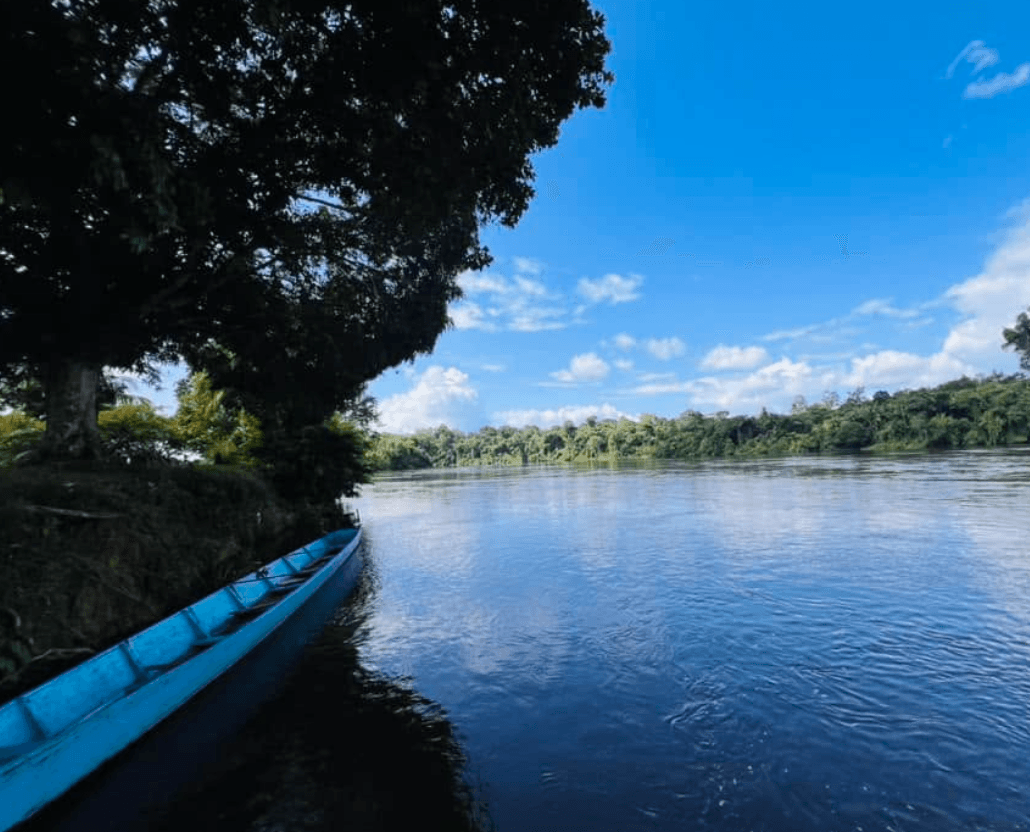
Resorts · Road transport to Atjoni (~3 hours), followed by a (~3 hours) journey upstream along the Upper Suriname River
Eco Resort Pasensie
Road transport to Atjoni (~3 hours), followed by a (~3 hours) journey upstream along the Upper Suriname River
Small guest accommodation identified in Pikin Slee tour itineraries. The residents belong to the Dombi-lo tribe, which is one of the twelve Saramaccan clans. The head captain of the Dombi is Wazen Eduards. The area and surrounding village count approximately 3,000 residents, making it one of the largest Saramaccan communities in the region. Pikin Slee is well-known for its vibrant cultural heritage, woodcarving traditions, and community-led tourism initiatives.
Local rules
Local rules: Always ask for permission from local village authorities, elders, or guides before photographing residents or community members. Dress modestly out of respect when walking through traditional Maroon villages. Swim only in designated safe areas (such as the sula's / rapids at Pasensie near Pikin Slee) under local guidance, and avoid strong main river channels. Respect local customs, traditional governance, and quiet hours within the village. Connectivity & Offline Use: Mobile phone reception is extremely limited or non-existent in this part of the Upper Suriname interior. Download offline maps, navigation apps, and translation dictionaries before leaving Paramaribo. Nearest help: Local village health posts and regional medical network support via the Medische Zending framework. Emergency Line: Call 115 (National Emergency Number) or 112 (Requires satellite or urban cellular connection). Getting there Access Instructions: Travel by road/minivan from Paramaribo south along the southern highway to Atjoni / Pokigron (approx. 3 hours). From Atjoni, board a motorized wooden dugout canoe (korjaal) travelling upstream along the Upper Suriname River past local settlements toward Pikin Slee and Pasensie. Coordinates: Upper Suriname River / Pikin Slee region, Sipaliwini District (approx. 3.92° N, 55.45° W) Before you go Identification & Travel Documents: Carry a valid passport or national ID, along with any relevant booking or tour paperwork. Payment & Currency: Cash only (Surinamese Dollars - SRD, US Dollars - USD, or Euros - EUR) for local community purchases, craft souvenirs, or extra village expenses. There are no ATMs or electronic card terminals in the interior. Packing & Gear: High-DEET insect repellent and high-SPF tropical sunscreen. Lightweight, quick-dry clothing, long sleeves/pants for evenings, and swimwear. Sturdy walking shoes and water shoes/sandals for rocky river banks and rapids. Waterproof dry bags to protect cameras, phones, and luggage during the canoe journey. Flashlight or headlamp with extra batteries, plus personal power banks. Health & Safety: Malaria prophylaxis and updated vaccinations (such as Yellow Fever) are strongly recommended for deep interior travel. Drink bottled, purified, or boiled drinking water. Languages Spoken: Saramaccan, Sranan Tongo, and Dutch. English is understood by local guides and hosts.
Nearest help
Nearest help Local village healthcare clinic at Debike can be reached via boat. Contact numbers: 7115912/ 8826576/ 8407824/ 8634586/ 8424408
Last verified 2026-10-09 · version 3
Confirm the exact meeting point with your operator.
- Coordinates
- 4.24723, -55.44133
- Contact
- pasensie.slee@gmail.com
Save essential contacts before departure. Agree who checks your arrival and how to communicate if mobile reception is lost.
Safety protocols for this kind of place
G02Your first minutes at a lodgeAsk for a short safety briefing when you arrive, even if you have stayed in the area before.
Ask for a short safety briefing when you arrive, even if you have stayed in the area before. A few clear questions help you find the right person and route if something happens.
- Who can you contact during the day and at night? Save the number and learn where to find that person.
- Where are the exits, meeting point, first aid supplies and fire extinguishers? Walk the route from your room while it is light.
- Which paths, riverbanks or jetties should guests avoid, especially after dark or rain?
- Which water is provided for drinking? Where can you wash your hands and refill safe drinking water?
- Where is the relevant clinic, and how would the lodge arrange transport if medical help is needed?
Tell the host about assistance you may need and any serious allergy relevant to your stay. Keep a torch within reach, keep the exit route clear, and secure valuables. Follow the property's mosquito protection and food hygiene advice. Before leaving on an excursion, tell the host your plan and expected return.
Version 1 · Reviewed 2026-12-15 · Source SCSD_Tourism_Safety_Project_Knowledge_Pack/02_DELIVERABLES_AND_REPORTS/Rev. - DELIVERABLE 2 REPORT - Tourism Awareness&Saferty SCSD project.docx | SCSD_Tourism_Safety_Project_Knowledge_Pack/03_SAFE_GUIDE_WORKSHOP_AND_TRAINING/SCSD_Safe_Guide_Workshop_1_FI
S01Accommodation safety briefingBrief guests on exits, assembly points, fire equipment and local hazards.
Visitor On arrival, explain emergency exits, assembly points, fire equipment, first-aid supplies, emergency contacts and relevant river or wildlife hazards. Guests should know who to contact at the property.
Version 2 · Reviewed 2026-12-15 · Source Rev. - DELIVERABLE 2 REPORT - Tourism Awareness&Saferty SCSD project.docx, section 3.3; draft pending TCT/PIU approval
S02Health and medical preparednessCarry personal medicines and agree how to reach medical care.
Carry your required personal medicines. Tell the host only the essential health information needed to assist you safely. Ask which clinic is relevant to your destination, how to contact it and how transport would be arranged. Keep your insurer’s assistance details accessible.
Version 1 · Reviewed 2026-12-15 · Source SCSD project Revised Deliverable 2 and Workshop 1 protocol guidance; https://www.medischezending.sr/contact/
S03Safe drinking waterUse treated or bottled water when advised.
Use treated or bottled drinking water when advised. Avoid untreated river water and ask the host which water source is safe for drinking.
Version 1 · Reviewed 2026-12-15 · Source Rev. - DELIVERABLE 2 REPORT - Tourism Awareness&Saferty SCSD project.docx, section 3.3; draft pending TCT/PIU approval