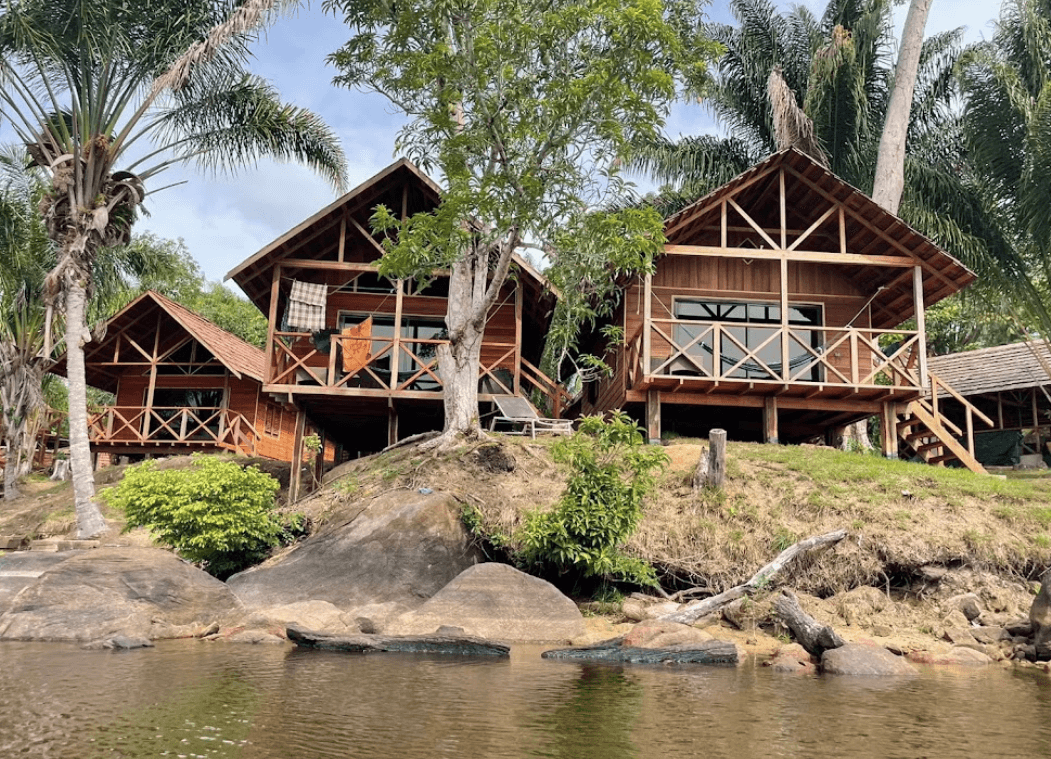
Resorts · CORE — Upper Suriname river, Atjoni–Botopasi/Dan
Ferulasi Resort Tang Luku
CORE — Upper Suriname river, Atjoni–Botopasi/Dan
Ferulasi Resort Tang Luku is a small eco-resort on an island in the Upper Suriname River, near the Ferulasi/Felulasi rapids in Sipaliwini district and is designed for quiet, small-scale nature and cultural tourism rather than mass tourism. The resort states that its name refers to “lost iron” and that the location has historical significance connected with the colonial-era pursuit of escaped enslaved people. It is one of the older resorts in the Upper Suriname region and is accessible by boat or by air via Laduani Airstrip.
Local rules
Travel access By air: Fly from Zorg en Hoop to Laduani Airstrip, then transfer a short distance to the resort by boat or local transport. By road and boat: Travel toward Atjoni or the Upper Suriname River roadhead, then continue by korjaal. Confirm the route with Ferulasi; the correct road/boat combination may change by season. Use an experienced local captain familiar with rapids and river channels. Wear a life jacket during all boat transfers. Waterproof luggage, passports, phones, medicines and documents. Do not plan independent night travel on the river. Confirm whether your package includes the air transfer, boat transfer and baggage. Rapids and water rules Swim only in areas approved by the guide. Do not enter the Ferulasi rapids without a trained guide. Do not raft or tube when water levels, currents or weather are unsafe. Wear a properly fitted life jacket for rafting, tubing, kayaking and boat transfers. Do not consume alcohol before water activities. Do not approach rocks, submerged branches or strong current lines. Children and non-swimmers require direct supervision. Follow cancellations caused by high water, low water, storms or poor visibility. The resort promotes swimming in natural “jacuzzi” areas and rafting/tubing, but these activities are inherently hazardous and must be guide-controlled. Community and cultural protocol Ferulasi operates in a Saramaka/Maroon cultural environment. Visitors should: Ask permission before entering nearby villages or community areas. Follow the guide’s instructions regarding clothing and behaviour. Ask before photographing residents, homes, ceremonies, children or elders. Do not enter burial grounds, sacred spaces or private yards without permission. Obtain approval for drones, commercial filming, research, interviews or mapping. Respect village quiet periods, ceremonies, religious practices and local decisions. Do not remove cultural objects, plants, timber, wildlife or artefacts. Do not assume that paying the resort grants unrestricted access to neighbouring communities. Purchase local products respectfully and at agreed prices. Environmental rules Carry out all plastic, batteries, fuel containers and other waste. Do not pollute the river with soap, oil, fuel or food waste. Use designated toilets, fires and cooking areas. Do not cut vegetation or disturb wildlife. Stay on guided trails in the jungle. Do not touch snakes, insects, plants or unknown animals. Use closed shoes with strong grip after rain. Follow all instructions during night tours and jungle camping. Pre-trip checklist Ask Ferulasi to confirm in writing: Exact resort GPS coordinates. Exact lodge dock and boat landing point. Current phone, WhatsApp and backup contact. Laduani Airstrip operating status and current flight schedule. Current water levels and rapids conditions. Medical Mission clinic status at Laduani. Evacuation procedure and estimated response time. Included meals, transport, guides and activities. Baggage limit and payment terms. Permission requirements for village visits, photography and drones.
Nearest help
Ferulasi is remote and has no confirmed hospital, ambulance station, fire station or police post at the resort. Police emergency, 115 Fire emergency, 110 Medical emergency, 113 Private ambulance, 117, where available Nearest organized medical support, Laduani Medical Mission clinic Laduani clinic location, Near Laduani Airstrip, across/near the Upper Suriname River Medical Mission general office, +597 499-466; info@medischezending.sr Local first response, Resort staff, guide, boat captain and local village Evacuation, Boat to Laduani or another medical post, followed by aircraft/road transfer Definitive treatment, Usually requires transfer toward Paramaribo Laduani has a Medical Mission outpatient clinic, and the area is described as having a permanently stationed doctor. Medical assistance in the Upper Suriname region is provided through a network of Medical Mission posts, including Laduani, Jawjaw, Goejaba, Djoemoe and other river settlements. Before arrival, request: The current Laduani clinic telephone number. Clinic opening and doctor availability. A named first-aid-trained resort employee. Boat and backup-boat contacts. Satellite phone or radio availability. Current Laduani Airstrip status. Medical evacuation aircraft contact. Exact emergency pickup point.
Last verified 2026-09-16 · version 2
Confirm the exact meeting point with your operator.
- Coordinates
- 4.382131, -55.391055
- Contact
- +597 7602500 · info@ferulasi.com
Save essential contacts before departure. Agree who checks your arrival and how to communicate if mobile reception is lost.
Safety protocols for this kind of place
G02Your first minutes at a lodgeAsk for a short safety briefing when you arrive, even if you have stayed in the area before.
Ask for a short safety briefing when you arrive, even if you have stayed in the area before. A few clear questions help you find the right person and route if something happens.
- Who can you contact during the day and at night? Save the number and learn where to find that person.
- Where are the exits, meeting point, first aid supplies and fire extinguishers? Walk the route from your room while it is light.
- Which paths, riverbanks or jetties should guests avoid, especially after dark or rain?
- Which water is provided for drinking? Where can you wash your hands and refill safe drinking water?
- Where is the relevant clinic, and how would the lodge arrange transport if medical help is needed?
Tell the host about assistance you may need and any serious allergy relevant to your stay. Keep a torch within reach, keep the exit route clear, and secure valuables. Follow the property's mosquito protection and food hygiene advice. Before leaving on an excursion, tell the host your plan and expected return.
Version 1 · Reviewed 2026-12-15 · Source SCSD_Tourism_Safety_Project_Knowledge_Pack/02_DELIVERABLES_AND_REPORTS/Rev. - DELIVERABLE 2 REPORT - Tourism Awareness&Saferty SCSD project.docx | SCSD_Tourism_Safety_Project_Knowledge_Pack/03_SAFE_GUIDE_WORKSHOP_AND_TRAINING/SCSD_Safe_Guide_Workshop_1_FI
S01Accommodation safety briefingBrief guests on exits, assembly points, fire equipment and local hazards.
Visitor On arrival, explain emergency exits, assembly points, fire equipment, first-aid supplies, emergency contacts and relevant river or wildlife hazards. Guests should know who to contact at the property.
Version 2 · Reviewed 2026-12-15 · Source Rev. - DELIVERABLE 2 REPORT - Tourism Awareness&Saferty SCSD project.docx, section 3.3; draft pending TCT/PIU approval
S02Health and medical preparednessCarry personal medicines and agree how to reach medical care.
Carry your required personal medicines. Tell the host only the essential health information needed to assist you safely. Ask which clinic is relevant to your destination, how to contact it and how transport would be arranged. Keep your insurer’s assistance details accessible.
Version 1 · Reviewed 2026-12-15 · Source SCSD project Revised Deliverable 2 and Workshop 1 protocol guidance; https://www.medischezending.sr/contact/
S03Safe drinking waterUse treated or bottled water when advised.
Use treated or bottled drinking water when advised. Avoid untreated river water and ask the host which water source is safe for drinking.
Version 1 · Reviewed 2026-12-15 · Source Rev. - DELIVERABLE 2 REPORT - Tourism Awareness&Saferty SCSD project.docx, section 3.3; draft pending TCT/PIU approval